
Overview
Contact
What Is Elbow Arthroscopic Decompression for Motion Loss?

The elbow is a complex hinge joint comprising three bones: the distal humerus, proximal ulna (forming the olecranon and trochlear notch), and proximal radius (radial head). It enables flexion/extension through the humeroulnar and humeroradial articulations and pronation/supination via the proximal radioulnar joint. Stability and motion are supported by the joint capsule, collateral ligaments (medial and lateral), and surrounding muscles like the biceps, triceps, brachialis, and forearm rotators. The anterior capsule is thin and distensible, while the posterior is reinforced by the olecranon fossa; synovial fluid and bursae reduce friction during a normal arc of 0°-145° flexion and 80°-90° pronation/supination.
Motion loss in the elbow often results from capsular contractures, adhesions, or fibrosis following trauma (e.g., fractures, dislocations), surgery, osteoarthritis, or inflammatory conditions like rheumatoid arthritis. Anterior contractures limit extension due to thickened capsule or adhesions in the coronoid fossa, while posterior ones restrict flexion from olecranon spurs or loose bodies. Heterotopic ossification (abnormal bone formation in soft tissues) or intra-articular pathology like synovitis exacerbates stiffness, reducing the functional arc (30°-130° flexion needed for daily activities). Symptoms include pain at end-range, crepitus, swelling, and functional impairments like difficulty reaching the mouth or perineum. Untreated, chronic stiffness can lead to muscle atrophy, joint degeneration, or compensatory shoulder/wrist issues.
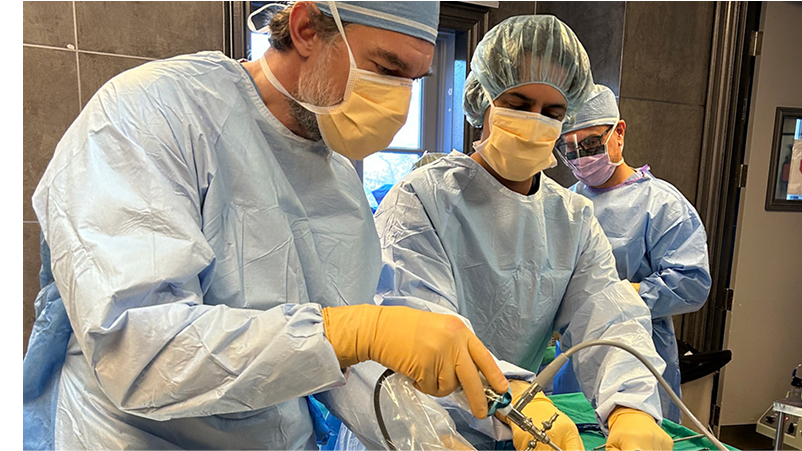
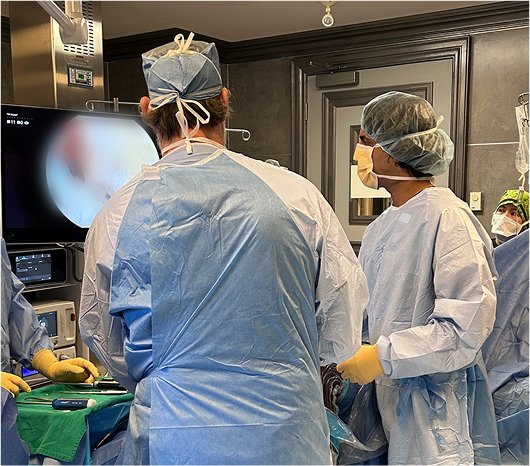
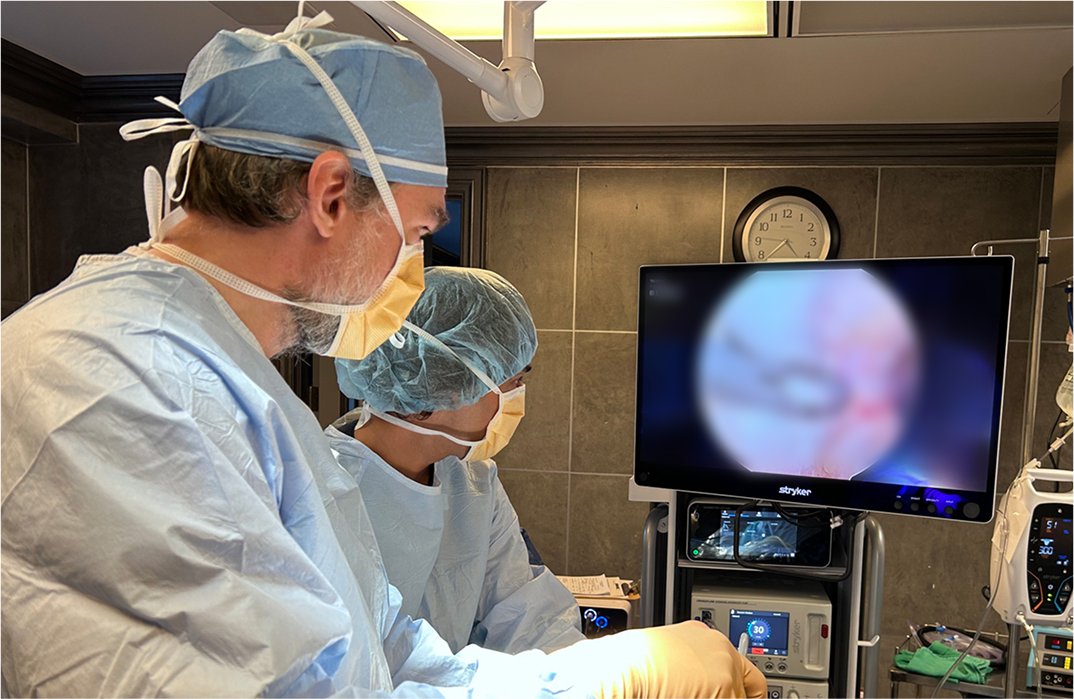
At OV Surgical, we advance elbow arthroscopic decompression in Canada with minimally invasive techniques that minimize downtime and optimize results. Performed in the lateral decubitus or prone position under general anesthesia with nerve blocks, the procedure uses three to five small incisions (less than 1 cm) for portals: anteromedial (near median nerve), anterolateral (radial nerve proximity), proximal anterolateral, posterolateral, and direct posterior. Fluid distention and a cannula system aid visualization of anterior and posterior compartments. Steps include synovectomy to remove inflamed tissue, anterior capsulectomy (excising thickened capsule with shaver or electrocautery while protecting the brachial artery and nerves), removal of loose bodies or osteophytes, and posterior decompression (olecranon fossa debridement). In severe cases, heterotopic bone excision or ulnar nerve release is added. The surgery lasts 45-90 minutes, with portals closed using absorbable sutures, emphasizing neurovascular protection.
Recovery
Our evidence-based protocols use cryotherapy, neuromuscular electrical stimulation (NMES), and progressive physiotherapy, tailored to contracture severity and associated pathology. In the protection phase (0-1 week), the elbow is splinted at 90° flexion with early gentle passive range of motion (PROM) initiated day 1 to prevent re-adhesion—continuous passive motion (CPM) devices for 6-8 hours daily targeting full extension/flexion. Pain is managed with multimodal analgesia.
From weeks 1-4 (active ROM phase), splinting is weaned, and active-assisted range of motion (AAROM) progresses with therapist-guided stretches, focusing on end-range holds (e.g., 5-10 minutes per session) and pronation/supination exercises. Low-load prolonged stretching devices may be used. By weeks 4-8 (strengthening phase), full active ROM is targeted with resistance bands for flexion/extension, forearm rotation, and grip strengthening (2-3 sets of 10-15 reps). Functional drills like reaching tasks build endurance. Advanced phases (8+ weeks) incorporate sport-specific or occupational simulations. Full motion is typically achieved by 4-6 weeks, strength milestones by 8-12 weeks, and return to activities by 3-6 months, verified through goniometric measurements (>130° flexion arc) and functional scores (e.g., Mayo Elbow Performance Score). Psychological readiness addresses stiffness fears through education.

Benefits
With success rates of 80-90% in regaining functional motion (e.g., >100° arc improvement), private elbow arthroscopic decompression at OV Surgical restores elbow flexibility, reduces pain, and prevents further degeneration, supporting return to sports and daily life. Patients report enhanced function, confidence, and quality of life, backed by meticulous follow-up and data-driven protocols.
FAQ
Contact